
Wednesday, May 1, 2013

Thursday, January 12, 2012
Friday, December 2, 2011

Tuesday, November 29, 2011
Friday, November 18, 2011
Marveo, Portugal
Beautifully executed 3-D buildings of hilltop castle town Marveo, Portugal. It takes a little while for the 3-D buildings to load. 39°23'39.78"N 7°22'40.32"
View Larger Map
View Larger Map
Steel Mill in Jiuquan, Gansu, China
I love Chinese industrial structures. They have a kind of dystopian sci-fi nature about them that your don't get in the west anymore - all coal dust and desert sand, with no apparent sign of human habitation. Until, that is, you scroll around a bit and find beautiful empty freeways, hundreds of apartment blocks and spacious urban plazas.
View Larger Map
This part of China is filled with fascinating stuff...
http://www.gearthblog.com/blog/archives/2006/07/huge_scale_mode.html
http://gizmodo.com/5859081/why-is-china-building-these-gigantic-structures-in-the-middle-of-the-desert
View Larger Map
This part of China is filled with fascinating stuff...
http://www.gearthblog.com/blog/archives/2006/07/huge_scale_mode.html
http://gizmodo.com/5859081/why-is-china-building-these-gigantic-structures-in-the-middle-of-the-desert
Monday, November 14, 2011
Your Taxpayer Dollars on Google Earth
View Larger Map
Majove Desert near Goldstone, California. Monthballed fighters sitting inside large earth berms in the middle of a very remote airfield in the sagebrush desert. Go figure.
Tuscon, Arizona. See the B2s and Strato Fortresses. Everyone should look at this on Google Earth. The mind boggles. This is just a tiny section of what must be the largest collection of mothballed military aircraft in the world.
View Larger Map
Monday, October 3, 2011
Dear new HP CEO: Bring the TouchPad line back | ZDNet
Dear new HP CEO: Bring the TouchPad line back | ZDNet:
'via Blog this'
'via Blog this'
I bought mine a few days ago (admittedly with a steep employee discount), so I'm so excited to get my hands on it. I want Apps, which is the thing I'm a little worried about.


Thursday, September 29, 2011
Saturday, August 6, 2011

Thursday, June 9, 2011
Whether you believe in the cloud or not, it’s coming.
The article from Barton George originally appeared here
Evolutionary vs. Revolutionary
One of the things to note with this new distribution is that the lines between virtualization and private cloud will start to blur (there will also be a blurring between private and public clouds, as hybrid clouds become more of a reality in the future, but that’s another story for another time). There are two ways to go about setting up private clouds, or really any type of cloud: evolutionary and revolutionary.
The evolutionary approach starts with virtualization and is appropriate where large investments in that area have been made and when you are talking about traditional enterprise applications. With virtualization serving as the foundation (see the graph below), additional capabilities are then layered on, such as usage-based billing/chargeback, workload life cycle management, dynamic resource pooling and a self-service portal for users.
One of the key aspects of the evolutionary approach is that at every step along the way, every capability added brings greater efficiencies and agility. You do not need to wait until you meet the full definition of a private cloud to derive value and you can stop anywhere along the way.
You Say You Want a Revolution?
The other way to get to the cloud is the revolutionary approach. This is appropriate for Greenfield opportunities within organizations, and is targeted at nontraditional, Web 2.0 applications that are "cloud-native" — applications written for deployment in the cloud. These revolutionary solutions will often be delivered as an integrated, turnkey unit (see graph below).
You Don’t Need to Choose
Rather than adopting one or the other, most organizations will use both approaches to get a private cloud. At this stage the evolutionary approach will be the predominant way of getting a private cloud. As more and more "new world" applications are developed for the cloud, the balance will begin to tip in favor of the revolutionary approach.
Whether you believe in the cloud or not, it’s coming. That being said, it’s not a phenomenon that will fill skies of IT departments tomorrow, but rather, it is starting out as another tool in IT’s bag of tricks. As time passes over the next three to five years however, cloud computing will increasingly become a greater part of the portfolio of compute models that IT departments manage, sitting alongside traditional computing and virtualization.
Cloud Computing Today
If you were to graph the distribution of compute models being used today by IT departments in large enterprises, it would look something like the chart below. Today, traditional computing and virtualization are where most of the distribution lies, with a little bit of flirting with the public cloud in the case of software-as-a-service (SaaS) applications for areas like human resources (HR), customer relationship management (CRM) and email. Additionally, to ITs consternation, public cloud usage can also be found in the form of the unsanctioned use of third-party cloud sites by various business functions. On the private cloud side its existence in large organizations is presently negligible.
Over the Next Three to Five Years
Over the next three to five years the above distribution will flatten out and shift to the right and will resemble the graph below. Private cloud will represent the largest compute model utilized, but it will be equally flanked by virtualization and public cloud. You’ll notice there will still be a decent amount of resources that remain in the traditional compute bucket representing applications that are not worth the effort of rewriting or converting to a cloud platform.
Cloud Computing Today
If you were to graph the distribution of compute models being used today by IT departments in large enterprises, it would look something like the chart below. Today, traditional computing and virtualization are where most of the distribution lies, with a little bit of flirting with the public cloud in the case of software-as-a-service (SaaS) applications for areas like human resources (HR), customer relationship management (CRM) and email. Additionally, to ITs consternation, public cloud usage can also be found in the form of the unsanctioned use of third-party cloud sites by various business functions. On the private cloud side its existence in large organizations is presently negligible.
Over the Next Three to Five Years
Over the next three to five years the above distribution will flatten out and shift to the right and will resemble the graph below. Private cloud will represent the largest compute model utilized, but it will be equally flanked by virtualization and public cloud. You’ll notice there will still be a decent amount of resources that remain in the traditional compute bucket representing applications that are not worth the effort of rewriting or converting to a cloud platform.
Evolutionary vs. Revolutionary
One of the things to note with this new distribution is that the lines between virtualization and private cloud will start to blur (there will also be a blurring between private and public clouds, as hybrid clouds become more of a reality in the future, but that’s another story for another time). There are two ways to go about setting up private clouds, or really any type of cloud: evolutionary and revolutionary.
The evolutionary approach starts with virtualization and is appropriate where large investments in that area have been made and when you are talking about traditional enterprise applications. With virtualization serving as the foundation (see the graph below), additional capabilities are then layered on, such as usage-based billing/chargeback, workload life cycle management, dynamic resource pooling and a self-service portal for users.
One of the key aspects of the evolutionary approach is that at every step along the way, every capability added brings greater efficiencies and agility. You do not need to wait until you meet the full definition of a private cloud to derive value and you can stop anywhere along the way.
You Say You Want a Revolution?
The other way to get to the cloud is the revolutionary approach. This is appropriate for Greenfield opportunities within organizations, and is targeted at nontraditional, Web 2.0 applications that are "cloud-native" — applications written for deployment in the cloud. These revolutionary solutions will often be delivered as an integrated, turnkey unit (see graph below).
You Don’t Need to Choose
Rather than adopting one or the other, most organizations will use both approaches to get a private cloud. At this stage the evolutionary approach will be the predominant way of getting a private cloud. As more and more "new world" applications are developed for the cloud, the balance will begin to tip in favor of the revolutionary approach.
Whether evolutionary or revolutionary, over the next three to five years cloud computing will become a greater part of IT’s compute portfolio. In the longer term however, the elements and characteristics of cloud computing will be absorbed into IT and it will simply represent the way computing is handled.
Wednesday, May 25, 2011
The mystery deepens.. what exactly was the technology used in the Seal-6 helos used in the Bin Laden black Op
Don't you just love a good conspiracy?
Pakistan has returned the wreckage of the helicopter used by Navy Seal 6 to kill Osama Bin Laden earlier in the month. Notwithstanding the utter embarassment Pakistans military must be feeling about having a couple of huge helicopters fly right up to the doorstep of their premier military academy in the middle of the night, it's also pretty embarassing for the US military that a high tech stealth helicopter had to be blown up as part of the mission.
I'm sure the Seal Team 6 commandos didn't have any issue with blowing up a several million dollars of tax-payers money, they are trained to think on their feet, after all. What interested me more is the actual technology involved. The published picture of the tail of the helicopter sure doesn't look like your standard MH-60 Blackhawk, which is the bird you you expect them to be using.

Supposedly the MH-60 Blackhawk is normally used by seals for covert ops. American Special Ops had this to say. "The MH-60 series of helicopters are a highly modified UH-60 Black Hawks, the U.S. Army's utility helicopter, flown exclusively by the 160th Special Operations Aviation Regiment (SOAR)"
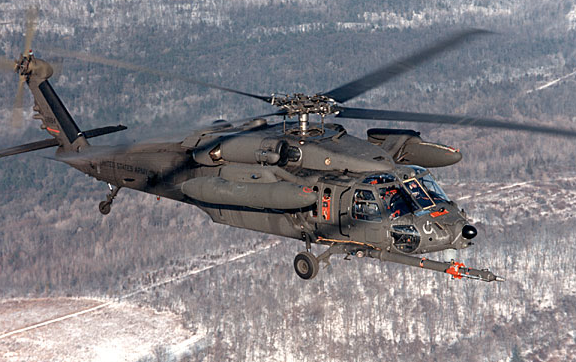
Take a look at this image instead of the cancelled RAH-66 Comanche. Look at the at the tail structure, and exhaust port outlets around the engine, which appear to be ported right down low by the tail just before the enclosed rear rotor in order to reduce the heat signature. I would say there are a lot more similarities between the tail rotor left in the Bin Laden raid and the Comanche, than the existing MH-60 models. Supposedly the Comance program was cancelled, but it is hard to believe the that military makes do with only the Bell Kinowa Warrior (based on Bell Jet Ranger, proven design by not exactly state of the art) as the only small helicopter used for reconnaissance.

Above Top Secret had some interesting things to say about both the noise reduction technology and the Comanche. They theorized was Eurocopter Blue Edge rotor blade noise reduction. I'm not sure about the credibility of this site, but assuming the technology is as effective as the demo, it does seem credible that these helicopters were indeed very quiet.
Black Ops being what they are, I see no reason why secret helicopter designs couldn't be out there.
Lets keep guessing.
Pakistan has returned the wreckage of the helicopter used by Navy Seal 6 to kill Osama Bin Laden earlier in the month. Notwithstanding the utter embarassment Pakistans military must be feeling about having a couple of huge helicopters fly right up to the doorstep of their premier military academy in the middle of the night, it's also pretty embarassing for the US military that a high tech stealth helicopter had to be blown up as part of the mission.
I'm sure the Seal Team 6 commandos didn't have any issue with blowing up a several million dollars of tax-payers money, they are trained to think on their feet, after all. What interested me more is the actual technology involved. The published picture of the tail of the helicopter sure doesn't look like your standard MH-60 Blackhawk, which is the bird you you expect them to be using.
Look at the very unusual
exhaust port (dark trapezoid shape),
the tapered cover on
the top of the rotor, and the
five rotor blades.
All screams stealth technology.

Supposedly the MH-60 Blackhawk is normally used by seals for covert ops. American Special Ops had this to say. "The MH-60 series of helicopters are a highly modified UH-60 Black Hawks, the U.S. Army's utility helicopter, flown exclusively by the 160th Special Operations Aviation Regiment (SOAR)"

Take a look at this image instead of the cancelled RAH-66 Comanche. Look at the at the tail structure, and exhaust port outlets around the engine, which appear to be ported right down low by the tail just before the enclosed rear rotor in order to reduce the heat signature. I would say there are a lot more similarities between the tail rotor left in the Bin Laden raid and the Comanche, than the existing MH-60 models. Supposedly the Comance program was cancelled, but it is hard to believe the that military makes do with only the Bell Kinowa Warrior (based on Bell Jet Ranger, proven design by not exactly state of the art) as the only small helicopter used for reconnaissance.

Above Top Secret had some interesting things to say about both the noise reduction technology and the Comanche. They theorized was Eurocopter Blue Edge rotor blade noise reduction. I'm not sure about the credibility of this site, but assuming the technology is as effective as the demo, it does seem credible that these helicopters were indeed very quiet.
Black Ops being what they are, I see no reason why secret helicopter designs couldn't be out there.
Lets keep guessing.
Thursday, May 19, 2011
The Cloud that Could
Cloud Computing has had increased visibility weekly recently, with offers from the major vendors competing for attention on many different fronts, and articles everywhere. It's also taken center stage for me personally, as I'm moving from a decade of deploying corporate IT infrastructure, to a new role within HPs cloud computing delivery group.

While most CIOs realize that successfully executing a shift to some degree of cloud based compute will save money, the question of what will occur with the savings is one not often addressed. This is a hypothetical scenario, to illustrate some of the potential cost and transformation issues.
Lets say you are CIO in of a company that outsources 1000 servers to a hosting provider. You currently purchase all the server hardware, the outsourcing provider installs it an runs it for you. Typical problems with this model include time to provision hardware, keeping patching up to date, standards and application design consistent, and underutilization of capacity.
The cloud provider convinces you that many of these servers can be hosted within a provider private cloud. The increased server utilization efficiency of the cloud means that the number of physical servers can be reduced by 30%, a substantial cost saving. The new billing model is a pay-per-server image model, where instead of buying hardware, the number of active server images is billed based on daily, automated daily usage statistics.
Over a two year time frame, you move to the provider cloud instead of refreshing end of life servers in your existing outsourced server hosting operation. Indeed the savings work out, and IT capital budget reduces because of reduced purchasing of new servers. Operational costs go up, but this was to be expected due to the transition from spending money on hardware to spending on a pay-per-server image model.
Your CFO starts to ask you if you are reducing headcount in your IT operation because the costs of providing the infrastructure required by your business applications has reduced. However, business groups are still demanding many changes to their applications, and the pipeline of backlogged project work for IT is as great as ever. In fact, many of the application groups quickly grasped the new flexibility offered by the cloud computing environment. The number of requests for approval of new development and test environments has risen substantially as these business groups realize they can get a new server image stood up within hours after approval instead of the previous months.
Possibility one - CFO loves this option. Cut IT staff numbers, because you are saving money on hosting and don't need all those guys that used to be supporting hardware installs.
Possibility two - HR director loves this option. Retrain former IT staff that used to be working on supporting hardware installation, standup and support, to address more of the project pipeline. You know this is a difficult option, it's debatable whether retaining will be effective, especially as many of the staff were previously to low cost offshore locations, have narrow, low level skill sets, and a pretty poor track record of showing innovation or autonomy.
Possibility three - you as CIO love this option. Cloud computing has enabled a rethink of the role and structure of your whole IT shop. Instead of an embattled operational focus and constant hardware refresh struggle, you've got staff that can be directed towards working with business groups on increasing the innovation and response times for their new ideas. This is a challenging cultural change, but judging by the new motivation that you are seeing from many staff, it's one worth pushing for.
Cloud computing might be still sky high in terms of turning vision into reality, but if we think it through, the possibilities for organizational change, culture change and cost saving are huge.

While most CIOs realize that successfully executing a shift to some degree of cloud based compute will save money, the question of what will occur with the savings is one not often addressed. This is a hypothetical scenario, to illustrate some of the potential cost and transformation issues.
Lets say you are CIO in of a company that outsources 1000 servers to a hosting provider. You currently purchase all the server hardware, the outsourcing provider installs it an runs it for you. Typical problems with this model include time to provision hardware, keeping patching up to date, standards and application design consistent, and underutilization of capacity.
The cloud provider convinces you that many of these servers can be hosted within a provider private cloud. The increased server utilization efficiency of the cloud means that the number of physical servers can be reduced by 30%, a substantial cost saving. The new billing model is a pay-per-server image model, where instead of buying hardware, the number of active server images is billed based on daily, automated daily usage statistics.
Over a two year time frame, you move to the provider cloud instead of refreshing end of life servers in your existing outsourced server hosting operation. Indeed the savings work out, and IT capital budget reduces because of reduced purchasing of new servers. Operational costs go up, but this was to be expected due to the transition from spending money on hardware to spending on a pay-per-server image model.
Your CFO starts to ask you
if you are reducing headcount in
your IT operation because
the costs of providing the
infrastructure required by
your business applications
has reduced.
Your CFO starts to ask you if you are reducing headcount in your IT operation because the costs of providing the infrastructure required by your business applications has reduced. However, business groups are still demanding many changes to their applications, and the pipeline of backlogged project work for IT is as great as ever. In fact, many of the application groups quickly grasped the new flexibility offered by the cloud computing environment. The number of requests for approval of new development and test environments has risen substantially as these business groups realize they can get a new server image stood up within hours after approval instead of the previous months.
Possibility one - CFO loves this option. Cut IT staff numbers, because you are saving money on hosting and don't need all those guys that used to be supporting hardware installs.
Possibility two - HR director loves this option. Retrain former IT staff that used to be working on supporting hardware installation, standup and support, to address more of the project pipeline. You know this is a difficult option, it's debatable whether retaining will be effective, especially as many of the staff were previously to low cost offshore locations, have narrow, low level skill sets, and a pretty poor track record of showing innovation or autonomy.
Possibility three - you as CIO love this option. Cloud computing has enabled a rethink of the role and structure of your whole IT shop. Instead of an embattled operational focus and constant hardware refresh struggle, you've got staff that can be directed towards working with business groups on increasing the innovation and response times for their new ideas. This is a challenging cultural change, but judging by the new motivation that you are seeing from many staff, it's one worth pushing for.
Cloud computing might be still sky high in terms of turning vision into reality, but if we think it through, the possibilities for organizational change, culture change and cost saving are huge.
Wednesday, May 4, 2011
Ellison and Hurd play hardball against HP
The Itanium debacle has Mark Hurd and Larry Ellison in a spite filled rampage against HP.
http://www.zdnet.co.uk/blogs/mapping-babel-10017967/itaniums-not-dead-say-parents-intel-and-hp-10022057/
http://www.zdnet.co.uk/blogs/mapping-babel-10017967/itaniums-not-dead-say-parents-intel-and-hp-10022057/
Thursday, February 24, 2011
Places not to visit in the World...Anthrax Island
http://www.nytimes.com/library/world/global/060299anthrax-island.html
A brief history from a post on the Google Earth Forum:
The base you have found is a former USSR Biological Weapons Research Facility..
The facility to the south of the airfield is the actual facility, which was named PNIL-52.. To the east of the airfiel is the housing for doctors, soldiers and families, known as Aralsk-7..
The facility was built in the 1950s as a secret location for testing microbiological warfare on animals.. It was finally abandoned in 1992, but still remains under close watch from both the american and russian military, because vast amounts of anthrax are buried here. Although the soviet doctors tried to kill the antrax spores before putting it in the huge steel canisters and sealing them, part of the spores are still deadly..
It is speculated that most of the people living in Aralsk-7 were actually women, because of numerous inscriptions and panels in the baracks, which bear the distinctions of women.. Also a large number of gynecological chairs and exam-rooms have been discovered inside the PNIL-52 facility, which has lead to speculations that the soviets were conducting experiments on unborn infants and pregnant women, although this has never been confirmed or otherwise proven.
A large number of doors are welded shut and many of the exam-room doors were only able to be opened from the outside. The welded doors have not been opened because of the fear of some remaining biological spores, which could contaminate the area.
View Larger Map
A brief history from a post on the Google Earth Forum:
The base you have found is a former USSR Biological Weapons Research Facility..
The facility to the south of the airfield is the actual facility, which was named PNIL-52.. To the east of the airfiel is the housing for doctors, soldiers and families, known as Aralsk-7..
The facility was built in the 1950s as a secret location for testing microbiological warfare on animals.. It was finally abandoned in 1992, but still remains under close watch from both the american and russian military, because vast amounts of anthrax are buried here. Although the soviet doctors tried to kill the antrax spores before putting it in the huge steel canisters and sealing them, part of the spores are still deadly..
It is speculated that most of the people living in Aralsk-7 were actually women, because of numerous inscriptions and panels in the baracks, which bear the distinctions of women.. Also a large number of gynecological chairs and exam-rooms have been discovered inside the PNIL-52 facility, which has lead to speculations that the soviets were conducting experiments on unborn infants and pregnant women, although this has never been confirmed or otherwise proven.
A large number of doors are welded shut and many of the exam-room doors were only able to be opened from the outside. The welded doors have not been opened because of the fear of some remaining biological spores, which could contaminate the area.
View Larger Map
Wednesday, November 24, 2010
Hot new Sedan from KIA
And the surprise auto maker in recent years...has got to be Kia. Kick-ass styling, pricing to win recession era pocketbooks, and quirky, original advertising.
This is new Kia Optima, available with a 274HP turbo! Looks a little bit like a Chevy Cruze on steroids. Detroit, you are doing, well, but still need to go more aggressive with styling...

This is new Kia Optima, available with a 274HP turbo! Looks a little bit like a Chevy Cruze on steroids. Detroit, you are doing, well, but still need to go more aggressive with styling...

Monday, November 15, 2010
Gartner's Top 10 Technologies for 2011
October 20, 2010
Larry Dignan
1: Cloud computing
This group of technologies has been on the top 10 lists for a few years. Now everything as a service will alter business models and IT procurement. Gartner analyst David Cearley said what has changed is that there are multiple services. Companies will probably need cloud computing brokers. Things to watch:
Where does the public cloud fit? IT is generally scared of the public cloud, but select workloads are fine.
Beware cloud washing. IT execs are comfortable with the vendors cloud washing but may not get real capability.
Limit access to specific clouds based on community and groups. That approach would minimize security risks. Gartner has exclusive clouds and community clouds as services to watch.
Private clouds are custom and packaged.
My impression: A safe pick for sure, but the cloud is getting more granular as it matures. Think cloud washing magnified.
2: Mobile apps and media tablets
Tablets and touch aren't new. Claunch said that the selection of applications changes the game for businesses. "Apple has leveraged the ecosystem of the iPhone," Claunch said. "And Apple has created consistency." In addition, Apple's iPad is the poster child for how consumerization is affecting corporate IT. Things to think about for enterprise IT:
Enterprise apps will need to be designed for the tablet.
Delivering these apps gets complicated due to the selection of platforms.
Context-aware computing can connect to customers better.
Marketing will drive a lot of projects to utilize tablets, but these devices can be used for inspections, surveys, image capture, documentation, and training.
Cearley added, "The PC era is over. Think of mobile design points."
My impression: It's stunning how many iPads are in this crowd of 7,000-plus IT execs and managers. Another thread: Almost all of these IT execs are carrying PCs not Macs. Typically, CIOs and the like are the last to get on board an early adoption curve for a new device. There's a frenzy over tablets.
3: Next-gen analytics
Companies need to develop "operational analytics" to make predictions and use data mashups. "There's value in very current information. We are now shifting our focus to start doing simulations and modeling to predict the future," Claunch said. These simulations would ultimately be run on smartphones and other devices. Algorithms will really matter to companies to support the right type of prediction.
Gartner didn't advocate doing a lot of analytics investment yet, but be ready to invest.
My impression: Analytics is largely untapped ground for many companies. Claunch's key point: "This is just being enabled now." Another key item: A show of hands revealed that the entire room had business intelligence software. A show of hands also indicated that no one thought those applications were delivering real value.
4: Social analytics
This concept revolves around taking social networking data and incorporating it into enterprise analysis. Sentiment, context, and influence are key areas for companies. "We're starting to see the tipping point," Cearley said. "It's moving from bleeding edge to mainstream activity." For now, look at communities you have to support and analyze an entry.
My impression: CIOs should be watching this stuff, but given the crowd response to business intelligence, I'm not seeing much progress on the analytics-social intersection.
5: Social communication and collaboration
Social collaboration is "inevitable," Cearley said. "Over the next few years, it will be impossible to ignore this," he added. By now, companies should have policies, high value social uses identified, and have experiments to link social with CRM systems. Meanwhile, unified communications will merge with social. Expertise location will probably be the best use case.
My impression: Gartner makes a good point, but I'd be willing to bet that enterprises are way behind the curve on social communication and what it means for collaboration and productivity.
6: Video
Corporate use of video is going mainstream. Low-cost video recorders are everywhere. Companies will need video content management systems and better design skills, and they'll need to address privacy issues and policy concerns. Will all conference rooms be recorded by default? E-learning, merchandising, marketing, webinars, and telepresence will all be key video uses. The tipping point will come in 2011 to 2013. In addition, video will be needed to reach younger employees.
My impression: Video has hit mainstream, but networks haven't. Will Vlogs really be the best use of employee time? One other key point: How will business intelligence systems digest video content?
7: Context-aware computing
The idea here is that social analytics and computing leads to knowledge about preferences. User interfaces would change based on context. Today, it's all reactive. By 2011 to 2013, there will be more proactive alerts. By 2014 to 2018, you'll have context integrated with enterprise systems. Ultimately, there will be a context platform. Portals, mashups, mobile, and social will combine. Vendors will offer "user experience platforms."
My impression: I have a hard time seeing strapped enterprises going all contextual. Look for business units such as marketing to launch these projects to drive sales. Companies will need to deliver context-aware services to businesses. Can't wait for all of those user experience platform pitches.
8: Ubiquitous computing
This topic has been discussed in previous years on Gartner's lists. In a nutshell, computers melt into objects. There will be machine-to-machine connections, portable personalities, and connectivity changes across multiple devices. There will be thousands of computers for each person on the planet, and you'll have multiple devices.
My impression: Ubiquitous computing is more a guiding principle for projects than something you think about in terms of budget. The timeline here is decades. What's also notable: Everyone has punted on getting one device to consolidate them all. We're doomed to carry a bunch of devices.
9: Storage class memory
When Flash meets RAM, there are differences in speed and costs. Persistent storage will also alter management. Claunch said that storage class memory goes beyond solid state drives. This new class of storage will lead to software where operating systems determine where data goes. Storage class memory will become more important over the next two to three years.
My impression: It's a bit experimental, but storage class memory will ride shotgun with analytics. Companies will have to define what data goes into fast memory.
10: Fabric based infrastructure and computers
Every vendor will talk fabric computing, so get ready for fabric-washing. The overall idea here is that you'll have infrastructure that manages resources in an integrated fashion. Cisco UCS and HP Matrix are examples. New ways of building servers will mean you buy pools of processors and memory instead of physically swapping boxes.
My impression: Forming your own flexible servers sounds appealing. The fabric thing sounds way futuristic for now, but the seeds are being planted.
This article reprinted courtesy of TechRepublic.
Larry Dignan
1: Cloud computing
This group of technologies has been on the top 10 lists for a few years. Now everything as a service will alter business models and IT procurement. Gartner analyst David Cearley said what has changed is that there are multiple services. Companies will probably need cloud computing brokers. Things to watch:
Where does the public cloud fit? IT is generally scared of the public cloud, but select workloads are fine.
Beware cloud washing. IT execs are comfortable with the vendors cloud washing but may not get real capability.
Limit access to specific clouds based on community and groups. That approach would minimize security risks. Gartner has exclusive clouds and community clouds as services to watch.
Private clouds are custom and packaged.
My impression: A safe pick for sure, but the cloud is getting more granular as it matures. Think cloud washing magnified.
2: Mobile apps and media tablets
Tablets and touch aren't new. Claunch said that the selection of applications changes the game for businesses. "Apple has leveraged the ecosystem of the iPhone," Claunch said. "And Apple has created consistency." In addition, Apple's iPad is the poster child for how consumerization is affecting corporate IT. Things to think about for enterprise IT:
Enterprise apps will need to be designed for the tablet.
Delivering these apps gets complicated due to the selection of platforms.
Context-aware computing can connect to customers better.
Marketing will drive a lot of projects to utilize tablets, but these devices can be used for inspections, surveys, image capture, documentation, and training.
Cearley added, "The PC era is over. Think of mobile design points."
My impression: It's stunning how many iPads are in this crowd of 7,000-plus IT execs and managers. Another thread: Almost all of these IT execs are carrying PCs not Macs. Typically, CIOs and the like are the last to get on board an early adoption curve for a new device. There's a frenzy over tablets.
3: Next-gen analytics
Companies need to develop "operational analytics" to make predictions and use data mashups. "There's value in very current information. We are now shifting our focus to start doing simulations and modeling to predict the future," Claunch said. These simulations would ultimately be run on smartphones and other devices. Algorithms will really matter to companies to support the right type of prediction.
Gartner didn't advocate doing a lot of analytics investment yet, but be ready to invest.
My impression: Analytics is largely untapped ground for many companies. Claunch's key point: "This is just being enabled now." Another key item: A show of hands revealed that the entire room had business intelligence software. A show of hands also indicated that no one thought those applications were delivering real value.
4: Social analytics
This concept revolves around taking social networking data and incorporating it into enterprise analysis. Sentiment, context, and influence are key areas for companies. "We're starting to see the tipping point," Cearley said. "It's moving from bleeding edge to mainstream activity." For now, look at communities you have to support and analyze an entry.
My impression: CIOs should be watching this stuff, but given the crowd response to business intelligence, I'm not seeing much progress on the analytics-social intersection.
5: Social communication and collaboration
Social collaboration is "inevitable," Cearley said. "Over the next few years, it will be impossible to ignore this," he added. By now, companies should have policies, high value social uses identified, and have experiments to link social with CRM systems. Meanwhile, unified communications will merge with social. Expertise location will probably be the best use case.
My impression: Gartner makes a good point, but I'd be willing to bet that enterprises are way behind the curve on social communication and what it means for collaboration and productivity.
6: Video
Corporate use of video is going mainstream. Low-cost video recorders are everywhere. Companies will need video content management systems and better design skills, and they'll need to address privacy issues and policy concerns. Will all conference rooms be recorded by default? E-learning, merchandising, marketing, webinars, and telepresence will all be key video uses. The tipping point will come in 2011 to 2013. In addition, video will be needed to reach younger employees.
My impression: Video has hit mainstream, but networks haven't. Will Vlogs really be the best use of employee time? One other key point: How will business intelligence systems digest video content?
7: Context-aware computing
The idea here is that social analytics and computing leads to knowledge about preferences. User interfaces would change based on context. Today, it's all reactive. By 2011 to 2013, there will be more proactive alerts. By 2014 to 2018, you'll have context integrated with enterprise systems. Ultimately, there will be a context platform. Portals, mashups, mobile, and social will combine. Vendors will offer "user experience platforms."
My impression: I have a hard time seeing strapped enterprises going all contextual. Look for business units such as marketing to launch these projects to drive sales. Companies will need to deliver context-aware services to businesses. Can't wait for all of those user experience platform pitches.
8: Ubiquitous computing
This topic has been discussed in previous years on Gartner's lists. In a nutshell, computers melt into objects. There will be machine-to-machine connections, portable personalities, and connectivity changes across multiple devices. There will be thousands of computers for each person on the planet, and you'll have multiple devices.
My impression: Ubiquitous computing is more a guiding principle for projects than something you think about in terms of budget. The timeline here is decades. What's also notable: Everyone has punted on getting one device to consolidate them all. We're doomed to carry a bunch of devices.
9: Storage class memory
When Flash meets RAM, there are differences in speed and costs. Persistent storage will also alter management. Claunch said that storage class memory goes beyond solid state drives. This new class of storage will lead to software where operating systems determine where data goes. Storage class memory will become more important over the next two to three years.
My impression: It's a bit experimental, but storage class memory will ride shotgun with analytics. Companies will have to define what data goes into fast memory.
10: Fabric based infrastructure and computers
Every vendor will talk fabric computing, so get ready for fabric-washing. The overall idea here is that you'll have infrastructure that manages resources in an integrated fashion. Cisco UCS and HP Matrix are examples. New ways of building servers will mean you buy pools of processors and memory instead of physically swapping boxes.
My impression: Forming your own flexible servers sounds appealing. The fabric thing sounds way futuristic for now, but the seeds are being planted.
This article reprinted courtesy of TechRepublic.
Tuesday, October 5, 2010
I'm sorry, who did HP hire as their new CEO again?

Well, he would now something about technology.
The name of the actual new HP CEO, Leo Apotheke translates as 'pharmacy' into english. A poisen pill for HP, or just the prescription needed?

.
Monday, October 4, 2010
Normally I'm a car guy, but this motorcycle made me gasp
Usually, my opinion about motorcycle design is kind of critical, mainly because I've never subscribed to the macho Harley mythos, and don't ride myself, so I think I should keep my mouth shut.
However, I saw several Victory Vision touring bikes over the summer here in Michigan. Of course, Michigan is very much the spiritual home to many things macho (hunting, fishing, V8s, Bob Lutz, drunken snowmobiling on frozen lakes, etc) so I was somehow not surprised that a) this beautiful piece of design didn't come from a traditional motorcycle maker, and b) it's made by a snow-mobile company.
Long and short of it is that the pictures don't do it justice. This bike is just sensational. Swooping, flowing, tight design. Widely expressionistic, beautifully engineered. The industrial design team got away with so much here, its a wonder. My favorite feature is the huge V shaped tailight that would give the Vision huge road presences as it glides past you in the night. The bike is huge. It's hard to grasp the size from the pictures below, but the website has better pictures of the bike in its element - rolling hills and forests of the North American summer.
This is the sort of design language that I've been waiting on for years from Harley Davidson, but they are staying true to their deliberately noisy exhausts, and hopelessly nostalgic retro design language, despite the fact that their core market now is 55 year old baby boomers who probably would appreciate a little more comfort and style.
At $23K, this is a pricey ride, but one which every owner would regard as a personal Victory, I'm sure.
Photos: Victory Motorcycles


However, I saw several Victory Vision touring bikes over the summer here in Michigan. Of course, Michigan is very much the spiritual home to many things macho (hunting, fishing, V8s, Bob Lutz, drunken snowmobiling on frozen lakes, etc) so I was somehow not surprised that a) this beautiful piece of design didn't come from a traditional motorcycle maker, and b) it's made by a snow-mobile company.
Long and short of it is that the pictures don't do it justice. This bike is just sensational. Swooping, flowing, tight design. Widely expressionistic, beautifully engineered. The industrial design team got away with so much here, its a wonder. My favorite feature is the huge V shaped tailight that would give the Vision huge road presences as it glides past you in the night. The bike is huge. It's hard to grasp the size from the pictures below, but the website has better pictures of the bike in its element - rolling hills and forests of the North American summer.
This is the sort of design language that I've been waiting on for years from Harley Davidson, but they are staying true to their deliberately noisy exhausts, and hopelessly nostalgic retro design language, despite the fact that their core market now is 55 year old baby boomers who probably would appreciate a little more comfort and style.
At $23K, this is a pricey ride, but one which every owner would regard as a personal Victory, I'm sure.
Photos: Victory Motorcycles


Sunday, September 26, 2010

Subscribe to:
Posts (Atom)